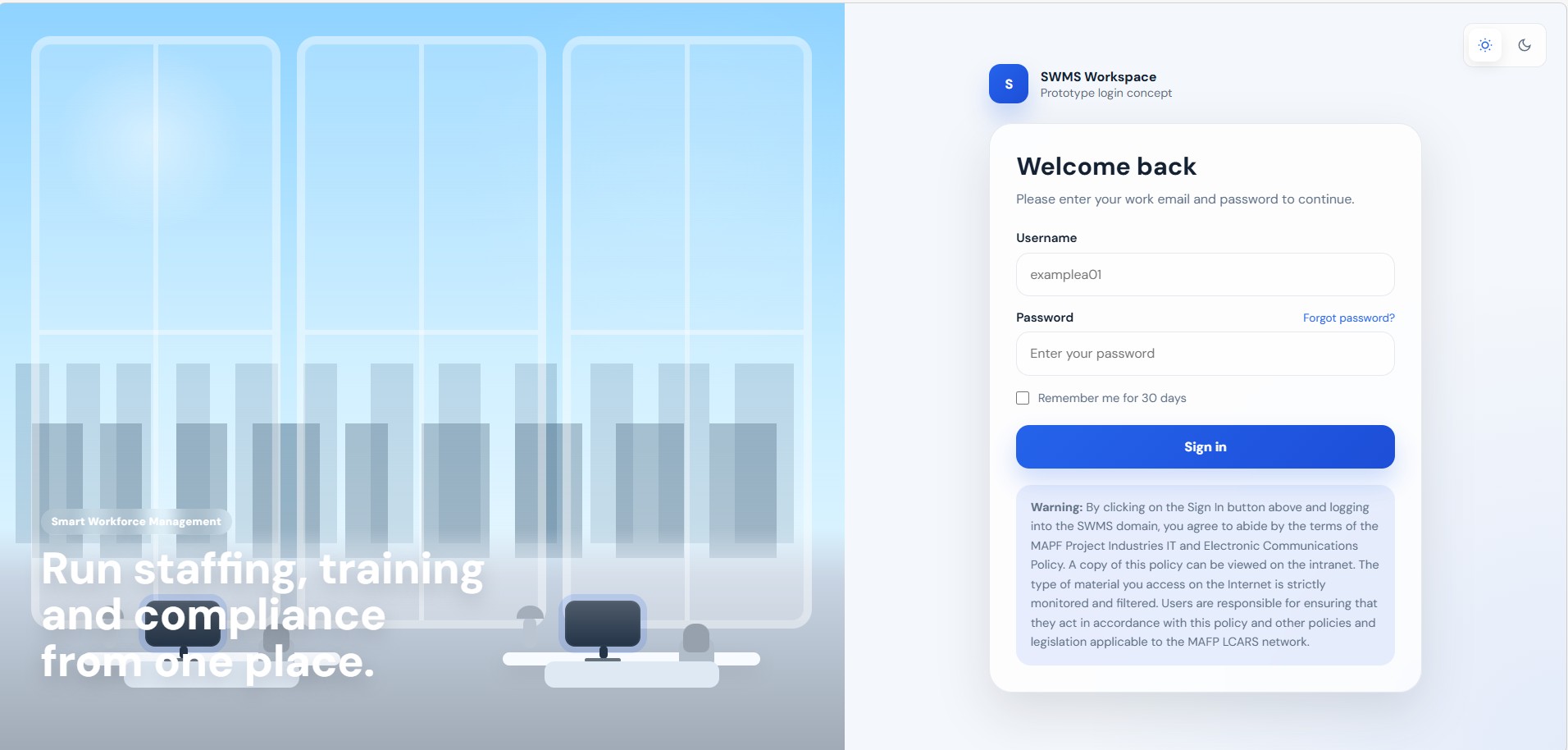
Smart Workforce Management System
Training visibility, compliance tracking and role-based access in a cloud-ready workforce platform.
View Case Study
Cloud · Web · Database · Business Intelligence
Computer Science & Digital Technologies graduate with over 30 years of operational leadership experience.
Introduction
Computer Science Graduate | Cloud · Web · Data
First-Class BSc (Hons) Computer Science & Digital Technologies graduate, combining modern technical skills with 30+ years of real-world business and operational experience.

Technical knowledge backed by real-world business experience
Portfolio
A selection of academic, technical and business-focused projects developed across web, cloud, data, security, networking and software development.
Training visibility, compliance tracking and role-based access in a cloud-ready workforce platform.
View Case Study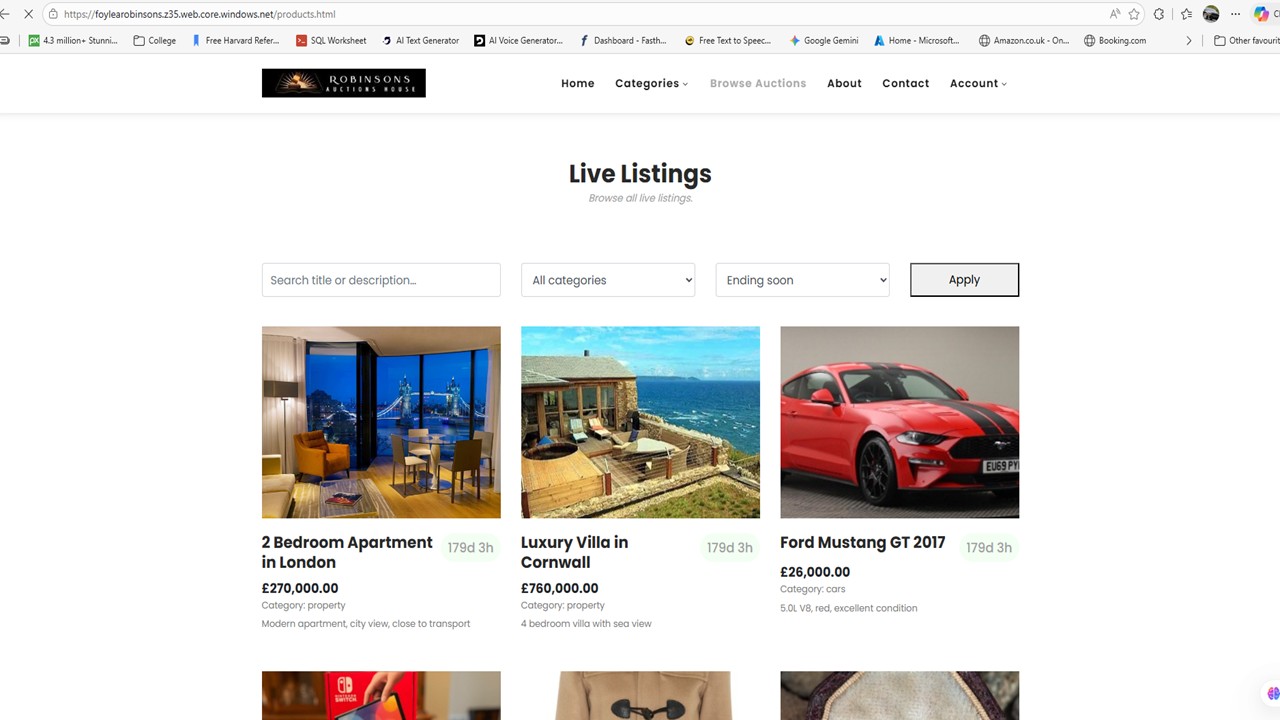
A full-stack auction application covering accounts, listings, bidding and administration.
View Case Study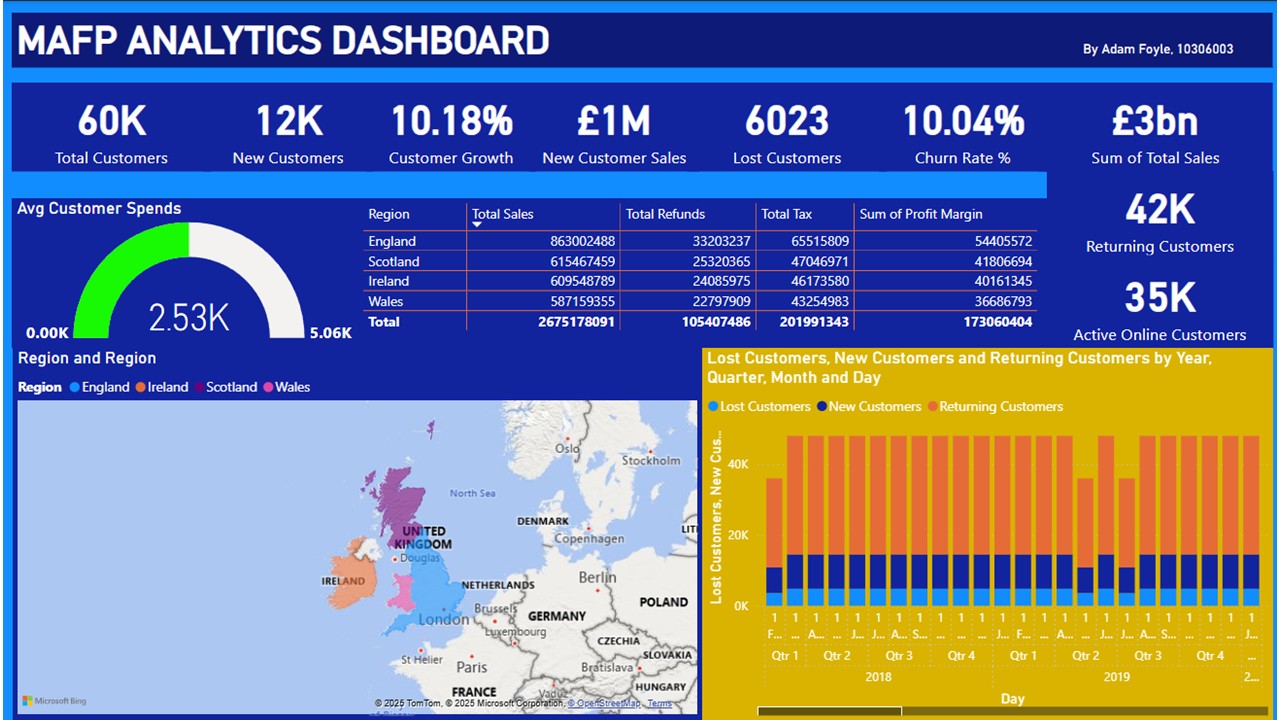
Interactive Power BI analysis of customer retention, sales and regional performance.
View Case Study
Explore four playful web experiences combining audio, storytelling, navigation and puzzles.
Explore the ProjectsSupporting academic and professional projects demonstrating database design, networking, security planning and workplace automation.
Derek's Tool & Equipment Hire: a relational database project covering data modelling, table relationships, integrity and SQL development.
View Database ProjectAll Seasons Department Store: a security and networking project exploring network infrastructure, potential vulnerabilities, risk assessment and protective measures.
View Security ProjectPractical spreadsheet-based tools developed to support retail operations, simplify routine processes and improve the handling of business information.
View Excel VBA ProjectAcademic networking exercises using Cisco Packet Tracer to explore network topology, device configuration, connectivity and troubleshooting.
View Networking ProjectAdditional projects completed across academic study and professional environments.
Portfolio
A practical blend of development, HTML, CSS and JavaScript
Featured

An interative mystery where visitors repair a strange clock to uncover a forgotten message. This project includes:

A fictional late-night radio explorer. This project includes:

An interactive starship bridge. This project includes:

An interactive storytelling room. This project includes:
Technical Project
Database Design & Relational Systems
Supporting Project
HNC Level 4 · 2024 · Database Design
Designing a structured database for a fictional multi-branch equipment hire business, covering branches, staff, customers, equipment and hire transactions.
The fictional business needed a structured approach to managing records across multiple branches. The project explored how a relational database could organise equipment availability, customer information, employee records and hire agreements.
I analysed functional and non-functional requirements, developed entity relationships and logical and physical database schemas, and considered linking tables for more complex relationships. SQL and CRUD operations were used to construct, populate and test database functionality.
The project produced a documented relational database design supported by SQL implementation, testing evidence and evaluation. It also explored data integrity, validation, access controls and opportunities for future expansion.
The work reinforced the importance of translating business requirements into reliable data relationships, validating information and testing the database before building user-facing applications.
Technical Project
Security & Network Planning
Supporting Project
Academic project · Security and networking
A security and networking planning exercise for a fictional department store, focused on infrastructure, operational risks and appropriate protective controls.
A retail organisation depends on reliable connectivity and appropriate safeguards for its systems and information. The project considered the risks that can arise when designing and operating a business network.
The work examined network planning, potential vulnerabilities, security considerations and suitable measures to reduce operational and information-security risks.
The project provided experience in documenting security requirements and considering the relationship between business operations, network infrastructure and protective measures.
Technical controls are most useful when they are chosen in response to actual business requirements and risks, rather than added without a clear purpose.
Technical Project
Workplace Automation & Business Tools
Supporting Project
Professional project · Retail operations
Spreadsheet-based tools developed to support practical retail processes and reduce repetitive administrative work.
Store-level processes can involve repetitive data entry, reporting and manual spreadsheet maintenance. These activities can consume time and introduce avoidable errors.
I applied Excel and VBA scripting to create practical tools informed by day-to-day retail operations, focusing on usability and simplifying recurring tasks.
The work demonstrated how small, targeted automation tools can support operational teams without requiring a complete replacement of existing business systems.
These tools highlighted the value of understanding the end user, while also revealing the limitations of isolated spreadsheets—an important influence on my later workforce management project.
Technical Project
Network Design & Configuration
Supporting Project
Academic exercises · Computer networking
Practical networking exercises exploring how devices and connections can be configured and tested within a simulated environment.
A functioning network requires an appropriate topology, correctly configured devices and a method for checking connectivity and resolving faults.
I used Cisco Packet Tracer in networking exercises to explore network layouts, device configuration, connectivity checks and troubleshooting principles.
The exercises provided practical familiarity with network simulation and a clearer understanding of how configuration choices affect communication between devices.
The work reinforced the importance of systematic testing, clear documentation and understanding networking fundamentals before diagnosing more complex problems.
Technical Skills & Capabilities
A practical blend of development, data, security and business knowledge
Azure App Service, Docker, cloud deployment, environment configuration and cloud-ready application planning.
HTML5, CSS3, JavaScript, Bootstrap, Node.js, Express, PHP, responsive interfaces and REST APIs.
MySQL, SQL, relational design, CRUD functionality, data integrity, reporting queries and Redis basics.
Power BI dashboards, Excel modelling, KPI reporting, data visualisation and customer analytics.
JWT authentication, role-based access control, secure design principles, GDPR awareness and risk thinking.
Computer networking fundamentals, Packet Tracer practice, routing/switching concepts and troubleshooting.
Tools and technologies used across academic, professional and personal projects.
Background
Computer Science & Digital Technologies
I graduated in June 2026 with First Class Honours in BSc (Hons) Computer Science & Digital Technologies, delivered through Walsall College in partnership with Staffordshire University. Building on my foundational qualification as an IT Technician in 2000 and over 30 years of retail management experience, this degree represents a natural progression into advanced technical domains.
About
Operational experience strengthened by modern technical training
I am a First Class Computer Science and Digital Technologies graduate specialising in cloud deployment, web application development, database design, and business intelligence solutions.
My technical approach centres on building secure, practical digital platforms that solve complex operational problems. This complements my technical background with over 30 years of commercial, operational and retail management experience. This extensive leadership foundation gives me a deeper understanding of business processes, compliance, staff onboarding, and system usability, ensuring the solutions I build deliver immediate business value.
My featured projects demonstrate end-to-end full-stack capabilities, including a cloud-hosted auction platform built with Node.js, Docker, and Azure; an interactive Power BI customer retention dashboard; and a secure workforce management system designed for compliance, staff training monitoring, and rota awareness.
These projects demonstrate both technical capability and the practical application of technology to real-world business challenges.
Feedback from colleagues, managers and business contacts across technical, operational and leadership roles.
The testimonials below reflect feedback received from individuals I have worked with across business ownership, retail management, technical support, process improvement and workplace systems development.
Note: The images shown are representative avatars and do not depict the actual individuals who provided these testimonials.

Former Managing Director · Homedeel Ltd & Edinburgh & Shrewsbury Estates
“Over the span of 17 years, Adam was a constant and invaluable presence at Homedeel Ltd. His versatility across roles and technical knowledge made a lasting impact on operations. I had the privilege of mentoring him personally, guiding him through complex business challenges and watching his evolution into a highly capable and thoughtful professional.”
“Adam was also responsible for supporting internal IT systems, maintaining business equipment and overseeing the preparation, repair and testing of systems supplied to customers.”

Former Line Manager · Expert in Retail, Technical and Hospitality Operations
“During my time as Adam’s line manager, I witnessed his technical capability, reliability and dedication. He played an important role in supporting CRM use, technical processes and operational improvements.”
“I encouraged Adam’s renewed interest in coding and scripting, which later supported the development of Excel VBA applications used within a national retailer’s store operations.”
“His professionalism and impact were clear throughout our time working together, and I have every confidence in his continued success.”

Former Retail Team Member
“I had the pleasure of working with Adam for over three years. He was approachable, supportive and often the go-to person for resolving issues, covering shifts and adjusting rotas at short notice.”
“His dedication, flexibility and unwavering support made him an exceptional manager and a true pleasure to work for.”
Megan also provided feedback on workplace systems and was available to support user-focused review of the Smart Workforce Management System during the final year project.
Contact
Opportunities, projects and professional conversations
I'm always interested in discussing opportunities where technology, problem solving and business understanding can make a practical difference.
Whether you're looking for a graduate developer, need support with a web or cloud-based project, or simply want to discuss an idea, I'd be happy to hear from you.
Staffordshire, United Kingdom
Open to remote, hybrid and on-site opportunities
Portfolio Case Study
A practical blend of development, data, security and business knowledge
Featured Case Study
A cloud-ready workforce management platform designed to improve staff training visibility, rota awareness, compliance tracking and role-based access within a large retail-style environment.
A Smart Workforce Management System (SWMS) was developed as a final-year project informed by previous experience of working with both Excel and Excel VBA applications that were store based. These applications featured no centralisation or backups, used a complicated user interface and featured a lack of data security.
Key objectives were derived from both personal experiences and research conducted through former colleagues and were identified as:
The solution was to design, develop and build a working prototype that demonstrated how a cloud-based workforce system could reduce reliance on spreadsheets, improve compliance visibility and support better operational decision-making.
The system was designed around a central MySQL database, with Node.js and Express providing the backend API and HTML, CSS, JavaScript and Bootstrap providing the user interface. Authentication and role-based access controls were introduced to ensure users could access only the information and functionality appropriate to their role.
A working application was produced with secure login, a training matrix, compliance tracking, employee records, administrative access and database-driven updates. The system demonstrated how training and workforce information could be viewed and updated more efficiently through a central digital platform.
I was responsible for the analysis, system design, database design, development, testing and evaluation of the SWMS project. I designed and implemented the application architecture, user interface, database structure, authentication and role-based access controls, and evaluated the system through user feedback and testing.
SWMS Dashboard Demo
View the HTML demonstration page developed as part of the project. This demonstration focuses on the main user dashboard and settings page. Users can personalise selected aspects of their experience while viewing their own information and requesting changes that require authorisation from an appropriate business representative.
Click any image to enlarge
Dashboard
Dashboard with day/night mode active
Rota Tracking
Rota Tracking
Training & Compliance
Training & Compliance
User Details
The system was built as a full-stack web application using Node.js and Express for the backend, MySQL for database management, and HTML, CSS, JavaScript and Bootstrap for the user interface. The application incorporated authentication, role-based access control, workforce training and compliance tracking, employee management and database-driven updates. The system was also designed with cloud deployment in mind using Microsoft Azure.
Full-Stack Web Development
Database Design & Management
User Authentication & Access Control
Workforce Management Systems
Business Requirements Analysis
Responsive Interface Design
Cloud-Ready Application Development
During the development of this system I gained practical experience in designing a workforce management platform that balanced usability, security and business requirements.
My previous experience with workforce management systems gave me a good understanding of their complexity and the frustrations they can create for users. This helped me define the initial requirements for SWMS, with the aim of creating a system that was easier to use, cloud-based, and able to restrict access to authorised personnel while still allowing employees to view information relevant to themselves. I also recognised the importance of validating my own assumptions through research and user feedback, helping to ensure that the final system was shaped around the needs of its users.
The project additionally strengthened my understanding of database relationships, authentication systems, responsive design and the importance of user-centred development.
While it is not possible to fully predict the future requirements of the system, I identified several potential improvements from both a design and user perspective.
Dedicated mobile application.
Automated training notifications.
Advanced reporting dashboards.
Automated rota and availability notifications.
Multi-site workforce management.
Enhanced mobile security and access restrictions.
Portfolio Case Study
A practical blend of development, data, security and business knowledge
Featured Case Study
A cloud-hosted auction platform designed to support user registration, authentication, auction listings, bidding functionality, image uploads and administrative management features within a secure digital environment.
The Robinsons Auction Platform was developed as a full-stack cloud application to explore how an online auction service could support multiple users, secure authentication, dynamic listings and bidding within a commercial-style environment. The project required frontend and backend technologies to work together with a relational database while also addressing image handling, administration and cloud deployment.
The aim was to create a practical auction platform where users could register, browse auctions, create listings, place bids and manage their account activity through a responsive web interface.
Develop secure user registration and login.
Create dynamic auction listing functionality.
Support image uploads for auction items.
Implement bidding functionality.
Provide administrative auction management.
Develop REST API communication between frontend and backend.
Apply cloud deployment using Microsoft Azure.
Create a responsive user interface.
The solution was to develop a full-stack auction platform combining a responsive frontend, REST API services and a central MySQL database. The system was designed to allow registered users to create and manage auction listings, browse available items and participate in bidding, while separate administrative functionality provided greater control over auction management. The application also incorporated authentication and access controls to protect user and administrative functionality. Microsoft Azure and Docker were used to explore cloud hosting and containerised deployment, providing practical experience of deploying a database-driven web application within a modern cloud environment.
A working full-stack auction platform was successfully produced featuring account registration, login authentication, auction creation, bidding functionality, image handling and administrative management features. The application demonstrated successful communication between frontend interfaces, backend APIs and relational database systems while also exploring Azure cloud deployment and Docker containerisation concepts.
The completed platform additionally provided a practical demonstration of how cloud-hosted applications can support interactive user-driven services within a modern digital environment.
I was responsible for the analysis, design, development, database integration, testing and deployment of the Robinsons Auction Platform. I developed the frontend and backend components, designed the database structure and REST API interactions, implemented authentication and administrative controls, and explored deployment using Microsoft Azure and Docker.
Robinsons Homepage
View the HTML demonstration page developed as part of the project. The demonstration focuses on the Auction House homepage, allowing customers to log in or register to use the platform. It also provides a preview of previously completed auctions and demonstrates how users could register their interest and receive relevant notifications.
Click any image to enlarge
Login page
Contact us
About us
Add auction
Seller information
Buyer bidding activity
Administration
The platform was developed as a full-stack web application using Node.js and Express for the backend, MySQL for relational data storage, and HTML, CSS, JavaScript and Bootstrap for the responsive frontend. JWT-based authentication and protected routes were implemented to control access to user and administrative functionality.
REST APIs provided communication between the frontend and backend, supporting account management, auction listings, bidding and image uploads. Microsoft Azure and Docker were also used to explore cloud hosting and containerised deployment.
Cloud Application Development
REST API Development
Database Design & Data Management
User Authentication & Security
Azure Cloud Deployment
Docker Containerisation
Responsive Web Design
Problem Solving & Testing
Security was considered throughout the development of the platform, particularly around authentication, protected routes and separation of standard user and administrative functionality. The application also incorporated validation of submitted information and controlled interaction with the database.
JWT authentication was used to protect account access and restricted functionality, while administrative controls were separated from standard user features.
This project strengthened my understanding of full-stack web development, REST API communication, database-driven application architecture and cloud deployment. Developing the frontend and backend as connected components highlighted the importance of designing the application as a complete system rather than treating each component independently.
The project also reinforced the importance of secure authentication, database structure, testing and responsive user experience design. It demonstrated how technical functionality needs to remain aligned with practical user requirements and the expectations of a commercial-style application.
Whilst it has not been possible to fully predict the future use of the system and the requirements, I have listed a few of the most important improvements both from both a design and user perspective..
Integrated payment processing.
Live auction timers.
Enhanced search and filtering.
User messaging and notifications.
Advanced reporting and administrative analytics.
Portfolio Case Study
A practical blend of business intelligence, data analysis, and decision support
Business Intelligence Case Study
A business intelligence dashboard developed to explore customer behaviour, sales performance, churn, refunds and regional trends using data visualisation and reporting techniques within Power BI.
Businesses can hold large volumes of customer and sales data without necessarily being able to identify the patterns and trends contained within it. The challenge for this project was to transform raw customer and transactional data into clear, accessible business information that could support management awareness and decision-making.
The project focused particularly on customer retention, churn, sales performance, refunds and regional trends, with the aim of presenting these areas through an interactive and visually accessible dashboard.
Analyse customer retention and churn trends.
Visualise sales and refund performance.
Compare regional business performance.
Identify customer spending behaviour.
Create KPI-focused dashboards for reporting.
Improve business visibility through interactive analytics.
Explore how business intelligence tools support decision-making.
The solution was to develop an interactive Power BI dashboard that transformed the available customer and sales data into a series of visual reports and key performance indicators. The dashboard was structured to allow users to examine customer retention, churn, sales, refunds and regional performance without having to interpret the underlying raw datasets directly.
Data preparation and analysis were supported using Excel-based datasets, while Power BI was used to create the data model, visualisations, KPI reporting and interactive filtering. Particular attention was given to dashboard layout and visual clarity so that important information could be identified quickly and presented in a form suitable for business decision-making.
A functional Power BI business intelligence dashboard was produced, providing customer retention metrics, churn analysis, sales trends, regional performance comparisons, refund tracking and KPI-based reporting.
The completed dashboard demonstrated how interactive data visualisation can make patterns and performance indicators easier to identify, helping transform raw business data into information that can support management awareness and decision-making.
I was responsible for preparing and analysing the project data, identifying appropriate KPIs, designing the dashboard structure and developing the Power BI visualisations. I also considered how the information should be presented from a business-user perspective, with particular emphasis on clarity, accessibility and the ability to identify meaningful trends from the underlying data.
Power BI Dashboard, for fictitious company MAFP Project Industries.
Click any image to enlarge
Executive Overview
Sales Performance Analysis
Customer & Regional Insights
Retention & Churn Analysis
The dashboard was developed using Microsoft Power BI, with Excel-based datasets used as the source for data preparation and analysis. The development process included data cleaning, data modelling, KPI identification, visualisation design and interactive filtering.
The dashboard was structured around different areas of business performance, allowing customer behaviour, sales, refunds, retention and regional trends to be explored through a consistent reporting interface. Particular attention was given to presenting complex information in a form that could be quickly understood by business users.
Business Intelligence & Analytics.
Data Visualisation.
Customer Retention Analysis.
KPI Dashboard Design.
Data Modelling.
Business Reporting.
Trend Analysis.
Decision Support Systems.
The dashboard demonstrated how customer retention, churn, sales performance, refunds and regional differences can be examined together to provide a broader view of business performance. Presenting these measures visually makes trends and potential areas of concern easier to identify than when working directly with large datasets.
The project also demonstrated how business intelligence can improve management visibility by converting operational data into accessible information that can contribute to planning and evidence-based decision-making.
This project strengthened my understanding of business intelligence, data visualisation and dashboard design, particularly the importance of transforming complex data into information that can be understood quickly by its intended audience.
The development process highlighted that an effective dashboard depends on more than the visualisations themselves. Data quality, appropriate KPI selection, report structure and consistent presentation all influence whether the information is genuinely useful to the user.
The project also allowed me to combine technical data-analysis skills with my previous business and operational experience. This helped me consider the dashboard from the perspective of the people who might use the information for reporting, performance monitoring and decision-making.
Further development of the dashbaord could explore:
Real-time or automated data integration.
Predictive analytics.
Automated reporting and scheduled updates.
Enhanced customer segmentation.
Additional drill-down and comparative reporting.